In 1932 in Depression-era America, MGM Studios came under fire after the release of Freaks, a horror film centered around carnival sideshow performers with real disabilities. The following 10 facts focus on the irrational censorship fueled by timid audiences, the public’s absurd reaction to the unknown, and the distressing exploitative nature of pre-Code Hollywood.
The film’s disastrous test screening was deemed “too upsetting” by moviegoers who had never before been subjected to seeing physically deformed actors on the silver screen.
In a frantic attempt to salvage a project which had already been slated for release, MGM was forced to make extensive last-minute cuts to numerous scenes. Despite the alterations, Freaks was inevitably doomed from the start because of its shocking and exploitative subject matter.
In spite of the film’s modified 59-minute version, international critics were no different in their repulsion. In fact, the movie was banned in the UK for 31 years before being released in 1963 with an X rating.
Though Freaks enjoyed a small fraction of success in only a handful of cities, an overwhelming majority of cinemas around the United States pulled the film, with some states banning it completely. Interestingly enough, some of the laws have never changed since the 1930s, still making it technically illegal to watch the movie in certain states.
Perhaps the film’s most memorable yet disturbing performance was that of the pinhead, Schlitzie. Not much is known of the disabled performer’s early life other than a few records indicating that he was born as Simon Metz in the Bronx.
Schlitzie’s gender came as a puzzling surprise to many. Not only did he wear a dress throughout the entire film, but the studio had billed his character as a female. It’s not clear why the studio chose to do so—except perhaps to acknowledge Schlitzie’s clothing, which was solely worn due to his incontinence.
He was born with microcephaly, a condition characterized by an abnormally small cranium which resulted in severe retardation and an unsettling abnormal appearance. Microcephalics (aka “pinheads” in sideshows) were exhibited as a species apart from man and were often billed as being from other planets.
Sadly, Schlitzie’s debilitating misfortune was a gold mine to carnies who indisputably exploited him throughout his life, all the while reaping the financial rewards.
3#Criticism And A Miscarriage
The film’s principal photography was completed in December 1931, and the test screening was the following month. The false expectation of reaping endless revenue from a box office hit was soon recognized from the disastrous reception previously mentioned.
People were said to have run from the movie theater, horrified by the appalling images. One woman even threatened to sue, claiming that the film was so grotesque that it had induced a miscarriage.
Following the studio’s last-ditch effort in editing, more than 30 minutes was cut from the film. All this footage has since been lost. MGM responded to the harsh criticism by taking out ads that congratulated themselves for being the only ones in the business that dared to humanize deformity.
The ads referred to the film as “a landmark in screen daring.” They attempted to justify the picture by praising the studio’s acknowledgment of nature’s little-known “grim reality.”
With a string of silent thrillers and 11 collaborations with Lon Chaney, director Tod Browning had already made a name for himself at MGM by the time Dracula was released, his most successful and lasting film.
The unforeseen success of the movie rescued the studio, which was in financial turmoil at the time. This allowed Browning to have considerably more leverage with future projects.
Such leeway was evident during the production of Freaks, despite the bizarre and uncharted cinematic territory the director was delving into. However, the producers were confident in Browning’s direction and believed the film was going to be as successful as his previous vampire hit.
Unfortunately for the optimistic studio, the film was a commercial failure. The immense backlash was unprecedented and proved disastrous for the director. Browning’s once renowned and flourishing Hollywood career was now in ruins, never to be recovered.
Sixty-two years after its release, Freaks was selected for preservation in the United States National Film Registry due to the film’s cultural, historical, and aesthetic significance.
In the 21st century, it’s hard to imagine that conjoined twins would be the subject of a sideshow spectacle. However, such was the case nearly a century ago when the public’s understanding of this rare phenomenon blurred the lines between reality and science fiction. Of course, this is evident with the casting of Daisy and Violet Hilton in Freaks.
Perhaps the best example of society’s lack of knowledge pertaining to in utero malformations was that of F. Scott Fitzgerald when he encountered the Hilton sisters for the first time. While on the set of Freaks, a drunken Fitzgerald found himself in the studio’s commissary where he unexpectedly came across the girls reading from a menu.
Fitzgerald, who was working as a screenwriter at the time, was so unnerved by the sight that he immediately scurried outside to vomit. The unsubtle exaggerated response merely echoed a nation’s lack of compassion for those considered to be different from the everyday norm.
The Hiltons made one more film, Chained for Life, in 1952. But they found themselves in poverty a few years later. Just after Christmas 1968, Daisy succumbed to the flu, leaving Violet alone and with her own mortality nearing. Their bodies lay undiscovered for several days. It was later determined that Violet had died two to four days after her sister.
Long before Tod Browning had the unfortunate privilege of directing Freaks, he had a firsthand look into the intimate lives of circus performers. Browning was just 16 years old when he ran away to join the carnival in 1896, a time in history when the popularity of sideshows was at its peak.
Beginning in the mid-19th century, the public’s curiosity to catch a glimpse of actual “freaks of nature” was fueled by P.T. Barnum and drove Americans to traveling sideshows. Throughout the years, cinema began a slow but overwhelming takeover as the sideshow’s main attraction, beginning with the introduction of kinetoscopes.
At the beginning of the 20th century, nickelodeons opened across America, further challenging the longevity of traveling carnivals and the wonders that once enchanted a crowd. Nonetheless, Browning’s years as a carny left a lasting impression on him. It not only influenced his most notorious box office bomb but inspired him to direct 1925’s The Unholy Three, a crime melodrama involving circus freaks.
When filming began on November 9, 1931, MGM Studios took every precaution to keep the premise of the movie a secret. Most importantly, the “freaks” were kept out of sight from anyone who was not directly connected to the film.
Even those intrinsically involved with the picture found it difficult to work in an environment they felt was uncomfortable, as if they were working beside septic monsters. Film editor Basil Wrangell regretted ever taking the job, claiming that the mere sight of them made you “crawl up the walls.”
One of the only cast members who afforded the “freaks” dignity was Olga Baclanova, who was initially taken aback by their abnormal appearances. At first, she struggled to even look at them, let alone form friendships.
The feeling of uneasiness carried throughout the studio to the point that the “freaks” were not even allowed to share the same eating quarters as the rest of the crew. Succumbing to pressure from fellow producers and studio executives, Louis B. Mayer banned any and all “freaks” from entering the studio’s commissary. He had received numerous complaints of people “throwing up” simply from being around the “freaks.”
It would be reasonable to assume that a group of people who shared profound maladies would ultimately form a bond rooted in understanding each other’s hardships. Nothing could be further from the truth, however, among the cast of Freaks.
It was undoubtedly clear in live sideshow performances which character was the main attraction. Typically, the show had only one performer who was genuinely deformed while the rest of the actors were in costume.
Such routine privilege proved difficult among an entire cast who had grown accustomed to being the star of their own show. Their inflated egos clashed, and the competition for attention grew.
One by one, the “freaks” began behaving like prima donnas on set, with several of them wearing sunglasses and acting like big-time movie stars. According to director Tod Browning, “the professional jealousy was amazing.” Not one of the physically deformed cast members had a good word for the others.
When Freaks momentarily hit the silver screen in the early 1930s, few imagined that one of the more ghastly characters would inspire a nationally syndicated cartoon strip.
In 1970, cartoonist Bill Griffith was feeling the pressure to create a “very weird” yet memorable character that wouldn’t easily fade from one’s memory. After rifling through a large collection of circus sideshow postcards, Griffith came across a familiar face that brought back haunting recollections of the 1932 cult classic.
Schlitzie, whom we have previously discussed, fascinated Griffith not only because of his apparent physical abnormalities but also because of his innocent, childlike demeanor. Schlitzie seemed oblivious and disconnected to the world around him. This led to the birth of Zippy the Pinhead, Griffith’s ideal caricature of someone who was the embodiment of eccentricity.
Though Zippy would go on to become an American comic strip icon, the exploited man who was the muse for such success would unceremoniously fade from the spotlight. Schlitzie died seven years after the cartoon’s first publication. He had traveled with various circuses and sideshows until his death in 1977.
10#Sexual Innuendos
From the moment Freaks hit the silver screen, it was clear that MGM would be in for a significant financial loss. Hoping to make back any money, the studio sold the film rights to exploitation distributor Dwain Esper, who altered the opening as shown in the video above.
As if Freaks had not already been controversial enough, Esper retitled the picture several times with names such as Forbidden Love, Nature’s Mistakes, and The Monster Show.
In addition, Esper released new posters exploiting the images of the deformed cast and particularly increased the focus on sexual innuendos by adding his own incendiary interrogatives. Some of the exploitative ad lines read, “Do Siamese Twins Make Love,” “What Sex is the Half-Man Half-Woman,” and “Can a Full-Grown Woman Truly Love a Midget?”
After editing out select footage and adding in his own bizarre reels, Esper toured with an adults-only road show where he showed the film for a fee. In time, he hired his own group of deformed individuals. He exploited them for audiences prior to playing the movie.
The film was projected onto hanging canvas banners that were set up in a tent he had constructed, keeping the bizarre act on the road for five long years.
The musicians who recorded your favorite albums were really, really high on drugs. It’s considered a feat when a professional musician manages to do his job without getting high. But you might not realize just how crazy your favorite musician’s drug habits really were. Some of the stories from the world of rock ‘n roll are so crazy, it’s a miracle that any of these people are still alive
1#John Lennon Got High And Told The Beatles He Was Jesus Christ
One day in 1968, John Lennon, high out of his mind on LSD, called an emergency meeting of The Beatles. He seemed so worked up about it that the band was sure it was a crisis. They rushed over as soon as they could and, first thing the next morning, gathered together in Apple Records boardroom.
“I’ve got something very important to tell you,” John Lennon announced, standing before his bandmates in the boardroom. “I am Jesus Christ. I have come back again. This is my thing.”
Lennon went with them, but he didn’t give up on his vision. While they were out eating, a fan came over and gushed over them, amazed that he was meeting John Lennon in person.
“Actually,” Lennon corrected him, “I’m Jesus Christ.”
“I still liked your last record,” the fan said.
He might’ve been high, but Lennon was more productive than ever. He had to be, he believed. He told one friend, “They’re going to kill me, you know. But I’ve got at least four years to go, so I’ve got to do stuff.”
That night, he called up an artist he’d just met named Yoko Ono and invited her over. The two spent the night together, falling in love and recording their first album, Two Virgins.
2#Elvis Got A Narcotics Badge So He Could Travel With Drugs
There’s a famous photograph of Elvis Presley shaking hands with Richard Nixon in the White House. It’s a baffling picture with an even crazier story. Elvis, during that meeting, told Nixon, “I’m on your side.” He claimed he’d been studying drug culture and communist brainwashing. Drug abusers and The Beatles, the two agreed, were spreading an anti-American spirit across the country.
It’s hard to imagine one of the biggest figures in rock ‘n roll being so strongly against drugs—mostly because he wasn’t. Elvis, at this point, was already heavily addicted to prescription drugs. He was at the White House because he wanted to do more drugs.
Elvis wanted a Bureau of Narcotics and Dangerous Drugs badge. His wife, Priscilla Presley, explained, “With the federal narcotic badge, he could legally enter any country both wearing guns and carrying any drugs he wished.”
After telling Nixon his worried about drug cultures, Elvis asked the Nixon for a badge. Nixon promised he’d get him one, and Elvis, surprised that his plan had worked, got so excited that he hugged the president.
A few years later, Elvis, with his Bureau of Narcotics and Dangerous Drugs badge still on him, died of an overdose.
3#Willie Nelson Rushed Into A Burning Building To Save A Pound Of Weed
In 1969, before he was a superstar, Willie Nelson’s house caught fire. A friend called him and told him what was happening, and Willie rushed home as quickly as he could. It wasn’t so much that he was worried about his property—he had a pound of weed in there, and he didn’t want to be found out.
The house was completely in flames when he got there, but Willie Nelson bravely rushed into save his marijuana. “I wasn’t being brave running in there to get my dope,” he later said. “I was trying to keep the firemen from finding it and turning me over to the police.”
He passed the drugs off to a friend who helped him hide it before the firemen got in. He managed to save his guitar, as well—but hundreds of demo tapes were lost in the fire.
Afterward, though, Nelson took the fire as a sign from God and moved to Texas, where his career really took off. A few years later, he was famous enough that he barely had to hide his pot habit. And, in 1977, Willie Nelson climbed up to the top of the White House with Crosby, Stills, Nash and President Jimmy Carter. Four musicians and a president smoked a joint on the roof while Secret Service guarded them.
4#Scientists Studied Ozzy Osbourne’s Body To See How He Is Still Alive
Ozzy Osbourne has done so many drugs that scientists have looked at his DNA to figure out how he could have survived taking so much cocaine. Even Ozzy himself has admitted that, by all logic, he should be dead, saying: “There really no plausible medical reason why I should still be alive.”
His DNA, the scientists said, had “several hundred thousand variants that have never been seen by scientists” and that they were pretty sure were keeping him alive. One of those variants is Neanderthal genes, making Ozzy one of the few people alive with Neanderthal in his blood.
It’s let him live an almost impossible life. For two straight years in the ‘70s, Ozzy took acid every day. And he’s done enough drugs to make Motley Crue uncomfortable.
Nikki Sixx has told a story about going on tour with Ozzy. The group was doing cocaine at a hotel pool when Nikki announced that’d they’d snorted the entire stash. With the cocaine gone, Ozzy grabbed a straw and snorted up a line of ants.
When asked, Ozzy didn’t deny Nikki’s story. He just said, “I don’t remember the shows, to be honest with you.”
5#Jimi Hendrix Was So Stoned He Didn’t Know He Got Kidnapped
Few people did as many drugs as Jimi Hendrix. His life was full of moments that never would have happened sober.
He never would have become a musician without them. Before he was a star, Hendrix was in the military. He got kicked out, though, partly because of drugs—his commanding officer caught him in the latrine, smoking pot and masturbating on duty.
After living the army, Hendrix became a rock star, and his drug addictions got bigger. At one point, in the late 1960s, that drug problem got him kidnapped. He was walking down the streets looking for dope and met a group of boys who promised they had some at their house. Hendrix went with them, but when he got there they locked them in a room and called his manager demanding ransom money.
Hendrix’s manager, though, sent a mob enforced named Joe Roberts after them anyway. Roberts scared the kids into letting Hendrix go and then gave them, in his words, “a beating they would never forget.”
Hendrix, though, didn’t seem phased. Roberts said, “Jimi was so stoned, he probably didn’t even know he was ever kidnapped.”
6#Keith Moon Passed Out On Stage, So A Kid In The Audience Finished The Set
In San Francisco in 1973, Keith Moon got ready for a set by washing down a fistful of horse tranquilizers with some brandy. Then he got on a stage in front of an audience and did his best.
When the tranquilizers kicked in, though, Moon struggled to keep up with the rest of the band. He lagged behind them, sluggishly tapping the drums, until, in the middle of “Won’t Get Fooled Again,” he fell asleep on stage.
The group dragged him off the stage while Pete Townshend sheepishly told the audience, “We’re just gonna revive our drummer by punching him in the stomach.”
They tried bringing Moon back out, but he couldn’t do it. With Moon out cold, Townshend asked the audience, “Can anyone play the drums? We need someone good.” A 19-year-old boy in the audience named Scott Halpin took them up on the offer. They brought the teenage boy up on stage, and he played drums for the rest of the set.
Keith Moon died of an overdose a few years later. A plaque in his memory was put up, reading, “There is no substitute”—but, as Scott Halpin proved, you could pretty well replace him with a random teenager in the audience.
7#Flavor Flav Spent $2,600 On Cocaine A Day
Flavor Flav has always been an odd presence in Public Enemy. In such a politically active group, a man who jumps around with fake breasts and a gigantic clock around his neck tends to stand out. It’s hard to fit him into the idea of a group that boasts, “You won’t see Public Enemy with no 40s and no blunts putting anything in our bodies that’ll be detrimental to our existence.”
Flavor Flav broke that rule in a big way. At the height of his addiction, Flav has said, he was spending $2,600 per day on cocaine. That habit continued over six years, costing him $5.7 million in cocaine purchases.
It definitely affected his behavior. In 1993, high out of his mind, Flavor Flav pulled out his gun and started shooting at his neighbor. He ended up in the Betty Ford Clinic, getting treated for crack addiction.
The group’s leader Chuck D, though, says Flavor was so crazy that he couldn’t tell when he was high. “If the guy’s always crazy, you don’t know when he’s up, when he’s down,” he told a reporter. “All I knew was that—dude, you crazy, and you need to show up on time.”
During his crack years, Flavor Flav came late so often that group member Professor Griff got fed up and kicked him in the chest. Chuck D, in Griff’s defense, said, “He could only take so much.”
8#Slash Thought The Predator Was Trying To Kill Him
Guns ‘N Roses guitarist Slash has done so many drugs that his heart has stopped working. At the age of 35, doctors told him that he had six days to live. They only managed to keep him alive by putting a defibrillator in his chest.
Slash toned down the drugs after that—but beforehand, he’d been a major abuser. Even on the very moment Guns ‘N Roses got signed, he blew almost his whole advance on drugs.
His craziest moment, though, came after a heroin binge in the early ‘90s. Slash became convinced that a monster that looked like the Predator was chasing him with machine guns and harpoons. Convinced that it was going to kill him, he ran naked through an Arizona golf resort, then punched through a hotel’s glass door and broke in.
Once inside, he grabbed a maid and used her as a shield while he made his way over to the lawnmower. Then Slash, bloody and naked, ducked behind the lawnmower, sure that the Predator couldn’t get him there.
When the police arrived, Slash was still too high to know what was real. He rushed up to them, thanked them for coming, and explained that an alien predator was trying to kill him.
9#A Red Hot Chili Peppers Song Has A Line That Is Only There To Bribe A Drug Dealer
When the Red Hot Chili Peppers recorded their album Freaky Styley, they enlisted the help of legendary funk musician George Clinton and a mountain of cocaine. There were drugs everywhere in the studio—so much that, when Anthony Kiedis tried to spend two weeks sober to record his vocals, he described it as “deciding to be celibate when you’re living in a brothel.”
That cocaine, though, had to be paid for, and George Clinton ran out of money fast. His drug dealer, a man named Louie, kept showing up and threatening him. Clinton blew him off until Louie showed up with henchmen. “George, I’m serious, many, you’re going to have to make good before I can give you anything else,” Louie told him. “I didn’t bring these guys for show, and if they have to hurt somebody . . . ”
Clinton didn’t have any money, but he offered Louie a part on the album instead. The band let Louie record the line “Look at that turtle go, bro” at the start of the song “Yertle The Turtle,” and it kept Louie happy enough that he kept the group supplied until the album was done
10#David Bowie Doesn’t Remember Recording station To Station
Station to Station is one of David Bowie’s most popular albums—and he doesn’t remember a thing about recording it. “I remember working with Earl on the guitar sounds,” Bowie has said, “and that’s about all I remember of it. I can’t even remember the studio. I know it was in LA because I’ve read it was.”
It was a strange period in Bowie’s life, where, fueled by cocaine and amphetamines, he grew a strange obsession with fascism and the occult. In interviews, he started saying strange things like, “I think I might have been a bloody good Hitler. I’d be an excellent dictator.”
All that, though, was coming from the drugs, which his collaborators described as essential to the process of making the album. “The most disturbing thing that can happen in the studio is to have to go to sleep if you’re on a roll,” guitarist Carlos Alomar explained. “If there’s a line of coke which is going to keep you awake until 8 AM. So that you can do your guitar part, you do the line of coke.”
Bowie, himself, didn’t think the cocaine was such a good idea. He barely ate or slept during the sessions and, at his darkest point, withered down to 80 pounds. “That whole time is a blur topped with chronic anxiety,” he would later say, looking back on it. “I could have easily died.”
Throughout the years, a number of sex education videos were made to help young people and adults alike understand puberty, pregnancy, and what was considered “appropriate” expressions of one’s sexuality. The general consensus from the 1930s to the early 1960s was that people needed to think rationally, suppress their natural urges, and think of sex as mainly a way to make children. It wasn’t until the late 1960s and early 1970s that media began to push for sexual liberation. Here are just a few examples of early sex education videos.
1#How To Undress In Front Of Your Husband
Made in 1937, this comedy film plays out as if it is a public service announcement. In the beginning of the film, the title card suggests that women need to learn how to undress in a sensual way to keep the interest of their husbands and fend off boredom during marriage.
The movie gives examples of two real-life women coming home from a party: Elaine Barrie Barrymore, a Hollywood and Broadway actress, and Trixie Friganza, an opera singer and comedian. We see that Elaine gracefully slips her dress off, while Trixie kicks her shoes off and scratches herself all over. The narrator congratulates Elaine on her abilities as a master of undressing and gets nervous at certain points, dumbfounded at her sex appeal.
The movie was created by husband-and-wife team Hildegarde and Dwaine Esper. It was considered to be one of the very first sexual exploitation films. While the scenes in this film may seem mild compared to R-rated movies today, it was censored in many areas of the US.
2#How Much Affection?
Mary and Jeff are a teenage couple who have been friends for years. They park their car to start making out and nearly have sex. Mary asks Jeff to stop, so he takes her home and apologizes. Mary learns that sexual urges are very normal, but when she seeks advice from her mother, she explains that Mary needs to learn to control her emotions, or she may regret it later on in life.
Mary and Jeff run into an old friend, Eileen, who had to drop out of school because she got pregnant. She married her boyfriend, Fred, who had to give up on his dreams of becoming a lawyer to get a job and take care of the baby. Mary and Jeff are two bright kids who have a lot of potential for success in life, so they begin to realize the repercussions of teen pregnancy. Later, at a party, Jeff gives Mary his class ring, which was a ritual in 1950s dating culture, called “a token of affection.” Birth control or condoms are never introduced as an option, and the movie teaches young people that they just need to hold out until marriage and find other ways to express their love for one another without sex.
Kristin Luker, the author of When Sex Goes to School, wrote that in the 1950s, there was a perceived notion that if sex education failed to demonize sex, teen pregnancy would become so common that it would bring an end to traditional marriage in society. The 1960s saw a sexual revolution, and premarital sex eventually became an accepted part of relationships.
3#Molly Grows Up
Made in 1953, this film would have been shown to girls during middle school health class. Molly is as 13-year-old girl who is beginning to feel interested in her older sister’s makeup and clothes. Everyone in town begins to notice that she is looking more grown-up. Soon after, she has her first period. Molly calls it “the curse” to her friend on the phone.
The school nurse speaks to Molly’s class and explains everything the girls need to know about female puberty and pregnancy. She explains the process of how a woman gets pregnant with “male DNA, sperm,” but never goes into any details on how the sperm actually gets into the woman in the first place. There is a poster on the wall, saying that while girls are on their period, they should not go horseback riding, go skating, play basketball, play volleyball, or go square dancing. But somehow, swimming is totally okay—but only after the third day.
According to a study by Trinity College, Molly Grows Up was meant to reinforce the traditional gender role of women in traditional families with Christian values. There would not be a challenge in the changes of women’s rights until the late 1960s, and it continues to be a struggle today.
4#Are You Ready For Marriage?
In 1950, sex before marriage was completely taboo, and teen pregnancy was enough to shame your entire family. Because of this, young lovers were getting married at a much younger age than they were today. The two main characters of this short film, Sue and Larry, are an 18- and 19-year-old couple who just got engaged after only dating for three months. Larry tries to convince Sue to elope, but they decide to see a marriage counselor at the church instead.
Without explicitly saying anything, the minister demonstrates with a rubber band and figurines of a man and woman, trying to explain lust and sexual tension. He goes on to say how the beginning stages of intense love causes young people to rush into getting married. He tells them that they should be at least 21 years old and have been engaged for one to three years, to give them a chance to actually know each other better.
According to a book called The Marriage and Family Experience, the 1950s were a seemingly magical decade where divorce rates declined, couples were having more children, and the traditional family unit was central to society. This can partially be attributed to how good relationships and family values were taught in movies like this.
It is said that 50 percent of all marriages nowadays end in divorce. Glenn Stanton from the Witherspoon Institute published an article detailing the different data sets we can use to look at the actual divorce rate of 2015. Depending on which data you look at, the number of divorces may not actually be too different from the 1950s. However, it is clear that divorce is much more accepted in today’s culture.
5#As Boys Grow
This video is narrated by a high school track and field coach who is answering freshman boys’ questions about puberty. The film starts out like just about every sexual education video that is shown in high school health classes. They talk about shaving, gaining weight, and getting taller. Then, very quickly, they cut to a scene of two boys sitting by a lawnmower, casually talking about wet dreams. One of the boys describes sperm as “white sticky stuff that starts babies.”
Interestingly enough, while Molly Grows Up never explicitly explains to girls exactly how pregnancy happens, As Boys Grow explains exactly how to have sex to the young boys. The coach encourages boys to start dating girls whenever they want. For boys, puberty is presented as a great thing, while in Molly Grows Up, it is described as a curse and something that girls simply have to deal with, rather than celebrate.
While the lessons from this movie may seem sort of outdated, it is important to remember that for years, talking about sexual organs was considered to be forbidden. In the 1950s, people were finally beginning to realize that sex education needed to be included in schools, as long as it was related to love, family, and having children.
6#Girls Beware
This movie was made to educate young girls on the various dangers of men who are trying to take advantage of them. There are various scenes where girls unknowingly find themselves in situations where they are kidnapped or raped. The movie suggests that girls should still be polite to these strange men but politely decline their advances.
One scene shows a major difference in the laws of then versus now. A girl goes to a new babysitting client’s house, and the phone number he provides for the girl’s mother turns out to be a fake. The daughter is clearly kidnapped, but the police policy back then was to wait and see if missing children returned home, in case they were running away. The daughter was found a week later, raped and murdered. In the movie, they put the responsibility of keeping children safe in the parent’s hands, rather than getting law enforcement involved right away.
In 1996, the US government created Amber Alerts in the memory of nine-year-old Amber Hagerman. It is an emergency broadcast system that lets the public know when a child goes missing. In the 20 years since its creation, Amber Alerts have saved the lives of 800 children.
7#How Do You Know It’s Love?
This movie shows a college-aged couple who have been dating for two months. The boy tells the girl that he loves her. She replies that she isn’t sure how she feels and goes home to ask her mother for advice. The mother explains that when people reach college age, things begin to get more physical, and they can often mistake sexual lust for real love. She tries to explain that even some adults never really find mature love and continue to base their relationships on looks their entire life. This movie presents the elements of being in a good relationship as having plenty to talk about, feeling at ease around one another, and feeling proud of each other. They should also agree on religious views, children, and money.
The girl and her boyfriend go on a double date with their friends, who have been dating for over a year. She realizes, through watching them, that they already have mature love. By the end, she realizes that the attraction she feels toward her boyfriend isn’t actually love. Despite the fact that they still enjoy each others’ company, they break up but agree to be friends.
The major difference between dating in the 1950s versus today is that men and women were essentially courting for a potential husband or wife. If they started to realize that their relationship would not last forever, they broke things off after a month or two and remained friends. In the 2010s, there is not as much pressure on dating, and it is not uncommon for boyfriends and girlfriends to be in a relationship without broaching the subject of marriage for a long time.
8#Boys Beware
This educational film from the 1960s warns young boys against potential homosexual encounters with older men. These boys are lured into dangerous situations either because they accept rides home from sports practice or are promised money and gifts from strangers.
The narrator describes homosexuals as “sick.” The real problem is clearly the fact that these men are pedophiles and sexual predators, but this movie fails to mention that there is a difference between the two. The intention behind this movie was to keep children safe by educating them to never accept rides from strangers, which is very good advice. However, since this movie was shown in schools, there is little doubt that it would have instilled homophobia among students, since it teaches that basically all gay men are criminals.
The Sex Ed Library recommends the Seattle King County program for teaching elementary school children about sexual exploitation. In these lessons, children are taught the differences between appropriate and inappropriate touching from adults. It also explains to children how they can find help if they are being abused. These lessons do not discriminate based on sexual orientation or gender.
9#Perversion For Profit
A reporter named George Putnam narrates this half-hour-long educational film on pornography. He claims that once a person becomes “perverted” by porn, they will never look at sex the same way again. This movie makes multiple ridiculous claims about porn, like that merely looking at gay or lesbian porn will turn you into a homosexual and that the “moral decay” caused by any kind of porn will make Americans weak against Communism.
In the 1960s, this movie was screened at YMCAs, Catholic groups, American Legions, and Elk Lodges, trying to spread the anti-pornography message to as many people as they could. Pornography is protected under the First Amendment, freedom of speech. The goal of this movie was to make people so angry about pornography that they would push to get the laws changed.
While the majority of Putnam’s claims are ridiculous, he was right to be angry about at least one thing: child pornography. At the time that this movie was made, the First Amendment still protected the distribution of nude or near-nude images of children. That did not become illegal until the 1980s.
10#The ABC Of Sex Education For Trainables
Created in 1975, this sexual education video is the source of the “It felt good, didn’t it, Ricky?” meme that exploded on the Internet. The original movie is 20 minutes long. It mixes scenes played out by actors with real-life footage of psychologists explaining sex to people who are mentally diabled or, as this movie calls them, “trainables.”
The famous Ricky scene is an example of what can happen when raising a mentally disabled child. The mother’s lines are meant to be a suggestion of what parents can say if they find their disabled child masturbating. However, the actor playing Ricky clearly isn’t mentally handicapped. When that scene is taken out of context from the rest of the film, it is silly.
The goal of The ABC of Sex Education for Trainables was to help parents and caretakers to train mentally disabled people to stop themselves from masturbating in public, getting pregnant unexpectedly, or contracting sexually transmitted diseases. While much of the advice seen in this video is still relevant today, Advocates for Youth now has a guideline for parents and educators to talk with mentally disabled children about sex
Celebrities are a lot like us. They have secrets, and sometimes they even have aspects of their lives that, for one reason of another, they keep hidden for years. But, in Hollywood, your secrets can only stay hidden for so long.
1#Joaquin Phoenix
Joaquin Phoenix gained critical success for his role as rockabilly legend Johnny Cash in the 2005 biopic Walk the Line. Phoenix shined as the “Man in Black,” even learning to play the guitar and mimic Cash’s dulcet vocals. In the process, Phoenix gained a reputation for his extreme commitment to character, to the point that his roles often spilled into the actor’s personal life.
In 2012, Phoenix again garnered praise for his role in The Master. In the film, Phoenix portrayed a war veteran lured into a cult by its charismatic leader, played by the late Philip Seymour Hoffman. In preparation for the role, Phoenix drew from experience with a cult that he knew well—the one he lived with for many years.
As a child, Joaquin, along with his brother River, grew up in the controversial religious group called the Children of God. Phoenix’s family joined the group in the early 1970s and, during Joaquin’s formative years, traveled throughout South America with the church.
In an interview with Entertainment Tonight, Phoenix explained his family’s infatuation with the group: “I think my parents thought they’d found a community that shared their ideals. Cults rarely advertise themselves as such.”
Ultimately, the family left the Children of God after becoming disenchanted, and Joaquin has put the whole experience behind him in pursuit of his prolific acting career.
2#Dolph Lundgren
Dolph Lundgren, a Swedish-born male model, made a name for himself, early, as a hypermasculine ’80s action star. With a black belt in karate, Lundgren began his career as a competitive martial artist while moonlighting as a club bouncer. It was at a club that Lundgren met, and began a relationship with, model-actress Grace Jones. His tryst with Jones would lead to a chance encounter with writer-director Sylvester Stallone and to Lundgren’s breakout role as Ivan Drago, the Soviet-bred antagonist of Rocky IV. The rest is Hollywood history, but acting marked a sharp turn away from Lundgren’s first career choice: chemical engineer.
Despite his macho persona onscreen, Lundgren possesses a genius-level intellect, and before he ever stepped foot in the ring with the “Italian Stallion,” Lundgren was a promising and sought-after academic star.
The actor excelled at science from an early age and was even offered a prestigious Fulbright Scholarship to the Massachusetts Institute of Technology. Lundgren describes the day he rode his motorcycle to meet with university staff: “The professors are waiting for the star student from Sweden and then they see me ride past outside all decked out in leather. They probably didn’t know what was going on.” Thankfully, Lundgren abandoned his career in academia, and we can all enjoy his talents in not one, but three installments of The Expendables.
3#Rock Hudson
Rock Hudson came to fame in the 1956 classic Giant, starring alongside heavyweights Elizabeth Taylor and James Dean. Hudson’s looks coupled with his boundless charm made him an instant celebrity.
Actors with Hudson’s talent rarely stay single long, and in 1955, Hudson married actress Phyllis Gates. However, unknown to Gates, the marriage was arranged by her employer and Hudson’s agent Henry Wilson. The coupling was meant to keep up appearances as Hudson, the man coveted by women around the world, was gay.
Predictably, Hudson and Gate’s marriage ended quickly, but due to societal pressure, Hudson would remain in the closet for several more decades. In 1984, Hudson defied years of suppression to publicize his sexuality, becoming one of the first openly gay stars in Hollywood and a model for generations to come.
A year later, Hudson also revealed his diagnosis with AIDS. Hudson used his image and fame to bring public attention to the disease and helped spread awareness of its dangers. Sadly, Hudson died in October 1985. He was 59. As one of the first openly gay men in Hollywood, and an early advocate for AIDS victims, Hudson’s legacy lives on to this day.
4#Chuck Barris
Barris came to prominence in the 1960s working as an assistant to Dick Clark. With a loan of $20,000, from his father-in-law, Barris was able to develop his first television show The Dating Game, which became a huge success. Later, Barris created The Gong Show, an instant classic, that showcased contestants performing wacky talents.
For most people, the life of a successful TV producer would be enough, but not for Barris. He liked to keep busy, and while working on various projects, the producer claimed to have been very busy operating covertly as a spy for the United States government.
In his 1984 autobiography Confessions of a Dangerous Mind, Barris alleges to have been an assassin for the CIA during the ’60s and ’70s. While the claims of the book are dubious, and Barris offers no evidence to back them up, his story was interesting enough for George Clooney to make a movie out of it in 2002. Barris has gone on to write many more books, including Della: a Memoir of My Daughter, in which he recounts the tragic loss of his only daughter to drug abuse.
The CIA officially denies all of Barris’s claims about his time as a spy—but then they would, wouldn’t they?
5#Caitlyn Jenner
Bruce Jenner was born in 1949 in Mt. Kisco, New York. In high school, Jenner proved to be a gifted athlete, lettering in football as well as basketball. He once took up water skiing as a hobby and went on to become the East Coast All-Over Champion in 1966, 1969, and 1971.
After high school, Jenner attended Graceland College on a football scholarship, but he was sidelined by a knee injury that left him limited to basketball and track.
In 1971, Jenner participated in his first decathlon, and by 1972, Jenner was competing in the decathlon at the Munich Olympics, where he finished 10th overall in the event. In 1976, Jenner won the gold in the Men’s Decathlon at the Montreal Olympics and was declared, by the media, to be the “world’s greatest athlete.” Jenner accomplished all of this while living with a deep personal secret that wouldn’t emerge for another 40 years.
In 2014, Jenner announced his divorce from his longtime wife, Kris Jenner. A year later Jenner shocked the world when he revealed that he had undergone gender reassignment surgery. At the age of 65, Caitlyn Jenner, introduced herself to the world. In 2015, ESPN awarded Jenner the Arthur Ashe Courage Award, and to this day, Caitlyn is one of the most prominent public figures to come out as transgender.
6#Sam Hurd
Sam Hurd was once a talented college football star at Northern Illinois who was known not only for his skills on the field but also for his friendly personality and devout Christian faith. In 2006, Hurd’s hard work paid off when he signed a contract to play for his favorite childhood team, the Dallas Cowboys. Hurd was handed a chance at NFL fame, but Sam had other ambitions in mind.
It was a mere five years later, in 2011, that Hurd was arrested outside of a Chicago steakhouse. Like so many others in the NFL, this arrest was drug-related, but Hurd wasn’t interested in scoring a few ounces of weed on a Saturday night. No, he was busted while trying to purchase a kilogram of cocaine from an undercover cop.
Hurd, allegedly, told the officer that he wanted to purchase an additional 5–10 kilos of coke a week, as well as 1,000 pounds of marijuana. He planned to distribute the drugs throughout Chicago in an operation that would have given Walter White a run for his money. On top of this, Hurd told the cop he was already selling 4 kilos of coke per week.
As if these confessions weren’t proof enough of Hurd’s poor judgment, consider that, at the time of his arrest, he had just signed a three-year contract with the Chicago Bears reported to be worth $5 million. Rather than collect his massive paycheck, Hurd found himself in a courtroom in November 2013, where he was sentenced to 15 years in federal prison on the charge of drug trafficking. Let Hurd’s story be a lesson for all: Sometimes people can really screw up a good thing. Don’t believe it? Just google Aaron Hernandez sometime.
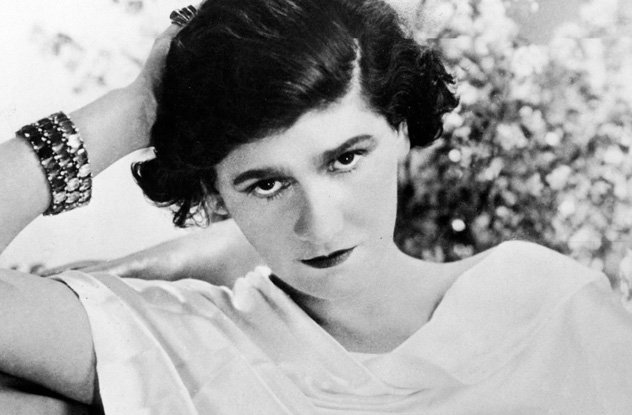
7#Coco Chanel
Coco Chanel, a legendary Parisian designer, was born in Saumur, France in 1883. By the age of 27, Chanel owned a successful clothing shop, and within a decade, she had launched her first perfume line and introduced the world to her “little black dress,” revolutionizing the fashion industry.
Unfortunately, by the 1930s, Chanel witnessed her native France invaded by Hitler’s army. Although France was quickly overwhelmed by the scourge of Nazis, many French citizens chose to resist the Germans at every turn. Chanel, however, was less than resistant. During the war, Chanel began dating a Nazi officer named Hans Gunther von Dincklage. This relationship might have been written off as a harmless, if not regretful, tryst, but renowned journalist Hal Vaughan claims otherwise.
In his book Sleeping With The Enemy: Coco Chanel’s Secret War, Vaughan asserts that Chanel did not object to the Nazi occupation because she, herself, was an anti-Semite. Vaughan goes even further to claim that Chanel acted as a Nazi Intelligence operative. The journalist pens an intrigue-fueled story in which Chanel is portrayed as jet-setting across Europe, her Nazi boyfriend in tow, and acting as a celebrity ambassador for the Nazi regime.
After the war, Chanel absconded to Switzerland (not a suspicious move at all), but in later years, she was able to reestablish herself in France with the backing of the wealthy Wertheimer family. The Wertheimers still hold majority control the Chanel brand to this day but are reluctant to speak on Chanel’s wartime activities.
8#Alice Cooper
Heavy Metal frontman Alice Cooper always had a flair for the dramatic. Performing with his band of the same name, Cooper pioneered the art of Shock Rock, a stage performance that drew its style from the macabre and horror genres. He developed a stage-persona that capitalized on the band’s outlandish music, makeup, and behavior. In one of his more bizarre stunts, Cooper once threw a live chicken off stage, not knowing that the bird couldn’t fly. Cooper watched in horror as a rabid crowd tore the animal apart. With that stunt, Cooper may have cornered the market on shock, but few fans know his most shocking persona—that of a self-described “prodigal son.”
Cooper grew up in a strictly religious house, and both his father and grandfather preached the gospel as Evangelical pastors. After living for decades as a typical hard-drinking rock star, Cooper had a change of heart. The rock star finally saw the light, and for the past several years, he has lived as a devout Born-again Christian. Cooper hasn’t quit rocking, though, and he hasn’t completely abandoned his onstage antics, but now he views himself more as an actor playing a character when onstage. He has, however, removed the live poultry from his act.
9#Patty Hearst
Patty Hearst was born lucky. As the granddaughter of William Randolph Hearst—think the 19th-century Rupert Murdoch—she was the heir to the fortune her family built through a media empire that thrives to this day. Yet, by the age of 19, it seemed that Hearst’s luck may have finally run out.
The world was shocked when, as a freshman at Berkeley University, Hearst was kidnapped from her dorm room by members of a homegrown terrorist group calling themselves the Symbionese Liberation Army. The urban terrorists abducted Hearst with the goal of extorting a ransom from Heart’s wealthy family. The plan may have worked too, but sometimes plans, and allegiances, can change.
Two months into her abduction, Hearst again shocked everyone by announcing her full-fledged allegiance to her captors via released audiotapes. Some believed that Hearst was pressured into supporting the group, but all myths were dispelled when Hearst was caught, on camera, taking part in a bank robbery along with the SLA. Hearst was also culpable in extorting an estimated $2 million from her father, during her abduction.
In 1975 Hearst was arrested by the FBI, convicted of bank robbery, and sentenced to 35 years in prison. Her sentence was subsequently commuted by President Jimmy Carter, and Hearst was released in 1979. Many have questioned Hearst’s actions during her abduction, and some have chalked up her behavior to Stockholm Syndrome, where a victim begins to identify with their captors overtime. Maybe Hearst, scared and young, was desperate to cope with her circumstances in any way possible. We may never know. As for her part, Hearst has remained tight-lipped about her time with the SLA.
10#Vin Diesel
Vin Diesel is known as a tough guy, and his roles in movies like The Fast and the Furious, Pitch Black, and xXx have done little to dispel that macho persona. But this tough guy might have the darkest secret of all. A secret so dark, so cloaked in mystery that Diesel has kept it locked away in the dungeon of his past for years. Until, during promotion for his movie The Last Witch Hunter, Diesel was forced to reveal his long-hidden truth.
Actually, maybe not quite closeted. Diesel has given plenty of hints to his love for the role playing game throughout his career. Take, for instance, his role of Xander Cage in xXx. Diesel insisted that the character of Cage have the name “Melkor” tattooed on his chest. Melkor just so happens to be the name of Diesel’s real-life Dungeons and Dragons character.
Another nod to Diesel’s fandom came in 2004 when he wrote the foreword to 30 Years of Adventure: A Celebration of Dungeons and Dragons. And then there was the time that Diesel posted a video, on his own YouTube channel, that featured him, and others, playing a game of Dungeons and Dragons that ended with Diesel declaring, “I just played a game of Dungeons and Dragons . . . and I had so much fun!”
Some people prefer movies in which all issues are sorted out by the end of it, and everything is tied together with a happily-ever-after bow. Others prefer flicks that make them think and wonder long after they’ve left the cinema or switched off the TV. On this list are some unanswered movie questions that have fans pondering and debating to this day.
Warning: There are no answers ahead, but there are plenty of spoilers
1#How Did The Joker Get His Scars?
The Joker has two versions of the origin of his scars, which he tells to Gambol and Rachel in The Dark Knight. First, he says that his father mutilated him, and then, he declares he stuck a razor in his mouth and created his own scars after his wife was attacked.
Fans of the movie might interpret these as just his insane ramblings or lies, but in reality, says a theory on Reddit, the villain is creating a theatrical performance because he is not insane. He wants people to think these things happened to him and that emotional abuse made him lose his mind.
This theory also states that the Joker is a man without a past because no one truly knows his origins or where his scars really came from. He is able to use other people’s pasts to manipulate them including Batman himself, but he cannot be subjected to the same kind of manipulation. This means he is an evil genius who doesn’t give up any of his secrets, including how his terrible scars really came about.
2#Where Did Boo’s Parents Think She Was?
In Monsters Inc, a little girl follows a monster named Sully back to Monstropolis via her bedroom door. Sully is terrified of her, since he believes humans to be toxic. Repeated efforts to return her to her bedroom fail, and she becomes stuck in his world.
After a day full of mishaps and adventures, Sully is able to return the little girl he named Boo to her home, and all is well again. However, this raises the question of how Boo’s parents were reacting to their daughter’s disappearance. This is not addressed in the movie, and many fans feel that this is not a realistic ending, even for an animated movie, since her parents would have been frantic considering their daughter was missing for at least 24 hours.
3#Did Jason Drown?
In the original Friday the 13th it is assumed that Jason Voorhees drowned when he was at a camp as a young boy. It is thought that the camp counsellors were distracted and didn’t notice that Jason was absent until it was too late.
Jason’s mother took revenge by killing off some of these counsellors back then and also years later when the camp is reopened. But in the second film, Jason is revealed to be alive and living in a forest, and it is not explained how he came back to life if he in fact drowned in 1957.
Why was drowning declared the reason for Jason’s disappearance if there was no body to prove it? If he never drowned, did he for some reason just wander off and stay behind? Some fans of the franchise believe the inclusion of the Necronomicon in Jason Goes To Hell solidifies the theory that Jason did drown and was resurrected off-screen.
4#Why Didn’t Jack Just Get On The Door?
As many people as there are that simply can’t stomach the movie Titanic, there are also just as many staunch fans of the blockbuster hit. And some of these fans still don’t understand why Jack couldn’t just get on the floating door alongside Rose to survive the freezing water.
It seems simple enough, Rose could have scooted over a couple of centimeters, and Jack could have clambered onto the door to give himself a chance at survival. But after an initial try sinks the door, he stays in the icy sea. It is likely that the door would not have been able to hold both their weight or that his added weight would have let the water level rise, leaving them both to freeze in it.
5#What Happened To The Taxi Driver In Deadpool?
Ryan Reynolds turned his Deadpool character into one of the best anti-heroes on the big screen in 2016. He has a dirty mouth, a penchant for chimichangas, and is literally unable to feel pain. He also gives dubious but seemingly heartfelt advice, as is evident in the conversation he had with taxi driver Dopinder.
After convincing Dopinder that he should not give up on the girl of his dreams just because she has fallen in love with his good-looking cousin, Bantu, Deadpool learns that Dopinder has bundled Bantu into the trunk of his taxi and was planning to murder him. Deadpool forgets his duffel bag with weapons in the taxi, and then Dopinder gets into an accident, leaving the trunk crumpled up and the car in the middle of an intersection. What happens next remains a mystery, with many fans wondering about Dopinder and Bantu’s fates. Hopefully the sequel sheds light on this question.
6#How Did Amy Dunne Get Pregnant?
There are quite a few unanswered questions left by the movie Gone Girl. For instance, whatever happened to Amy’s head wound when she returned home, and what did the cops figure out from the CCTV footage taken from Desi’s house?
One of the biggest questions, however, is just how Amy Dunne managed to get pregnant with Nick’s baby (if, in fact, it was his). Amy hints in the movie that Nick’s sperm sample was never destroyed by the fertility clinic, regardless of their letting him know that it has been. But even so, how was she able to get her hands on the sperm, while ensuring the clinic sent Nick the confirmation that it had been destroyed? And where did she find a doctor who not only would go along with her plan but was good enough at the insemination procedure to ensure she’d get pregnant even though there is a less than 20 percent chance of success?
7#Did Patrick Bateman Kill Anyone?
It is fairly obvious that Patrick Bateman is pretty psycho. He has an ATM talking to him, his gun magically appears from nowhere, and cars randomly explode. He has a secret notebook that reveals all of his murderous fantasies, too. He’s a successful businessman by day but descends into crazy when night falls.
So murdering people seems right up his alley. However, Bateman is so delusional and insane, prompting the question of whether he murdered anyone or if the killings in the movie simply played out in his crazed mind. Many people believe the latter to be the case.
8#Did John Otway Die?
The Grey sees Liam Neeson playing the role of John Otway, an oil worker who kills wolves that threaten his oil drilling team. His wife left him, and he is on the verge of committing suicide when the sound of a howling wolf makes him change his mind.
Instead, he heads back home with the rest of his team, only for their plane to crash during a blizzard. Otway and most of his team survives, then several of them are killed by wolves as they struggle to survive on the crash site. More disasters befall the team, leaving Otway as the only survivor. Out of futility, Otway curses God but asks for His help at the same time only to receive none. Shortly afterward, he comes face-to-face with a female alpha wolf, and he charges at her. The screen then fades to black, and in the post-credits scene, Otway can be seen lying with his head on the dying wolf’s stomach.
The big question is then whether Otway died or if he survived the fight with the wolf and managed to find help or was rescued.
9#How Has Becca And Tyler Never Seen Pictures Of Their Grandparents?
The Visit is a horror movie by M. Night Shyamalan that has a fairly big twist at the end of it. Unfortunately, this twist leaves a lot of unanswered questions. While it is explained that the two kids in the movie will be visiting their grandparents even though they have never met before because their mother held a grudge against them for years, it is fairly unrealistic that the kids would not have tried to figure out at least what their grandparents looked like with help from Google.
With that said, how did the two crazy old people know that these kids wouldn’t know what their own grandparents looked like? And also why wasn’t anyone looking for the two old people, considering that the woman murdered her own kids and the both of them escaped from a mental asylum?
10#Did The Top Fall Over?
In Inception, Leo DiCaprio plays the role of a thief, Dom Cobb, who is able to infiltrate people’s subconscious while they are in a dream state to steal their valuable ideas and secrets. To leave his life of crime behind, Cobb has to reverse his skill by planting an idea into the mind of a CEO which would make the man believe the idea is his own.
In the movie, Cobb has a totem in the form of a top that he spins. If the top topples over after spinning, he is awake. If it continues to spin, he is still dreaming. After all of his adventures in the movie, and spending a lot of time in the dream world, Cobb returns home to his children. At the very end of the movie, the top is shown spinning round, but then the shot cuts out without revealing whether the top falls over or continues to spin. This left fans wondering whether Cobb was awake or still in the dream world.